
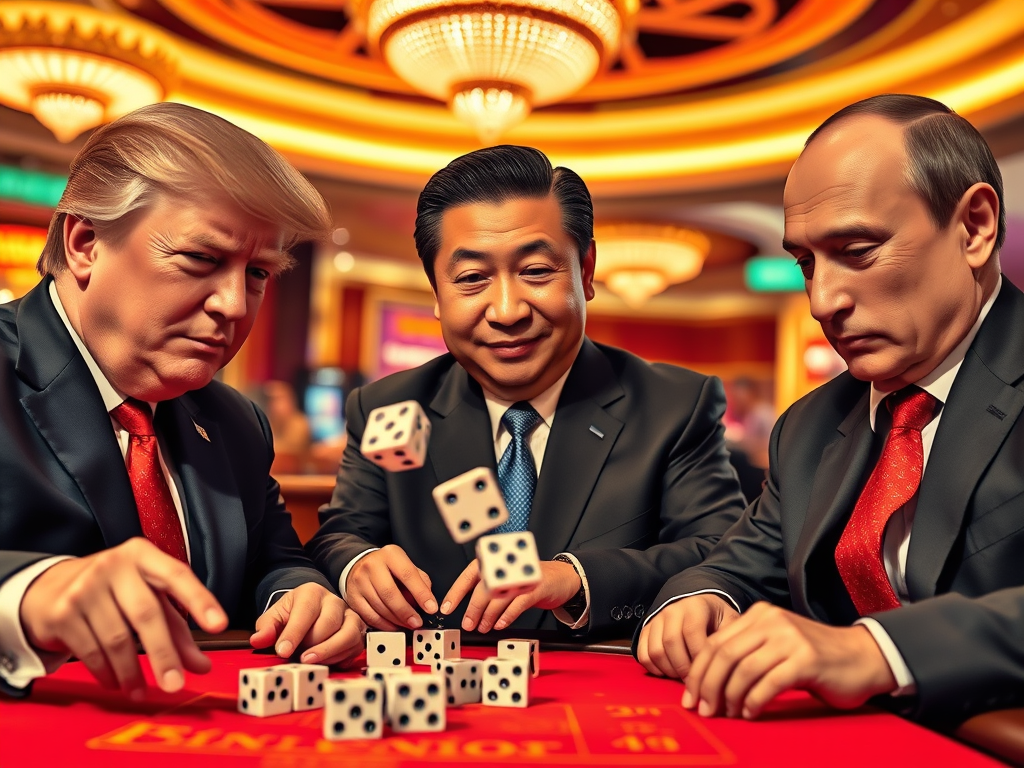
We have been analysing the foreign policies that the three main polarizing political personalities in the world have been carrying out. We are trying to find commonalities around the three of them and how their personalities play a role in the way they make decisions.
If compared by pairs, we get the following main similarities:
Putin and Xi
- Autocratic Governance – Both leaders have removed internal checks on power, ruling without significant political opposition.
- Multipolar World Vision – Both challenge U.S. dominance and seek alternatives to Western-led global institutions.
- Historical Justifications – Putin uses Soviet history; Xi emphasizes China’s imperial past and anti-colonial narratives.
- State-Controlled Media – Both use strict media control and censorship to maintain narrative dominance domestically.
- Long-Term Strategic Planning – Xi and Putin prioritize gradual, calculated expansion of influence rather than short-term gains.
Putin and Trump
- Nationalist and Populist Rhetoric – Both framed themselves as defenders of their nations against external threats.
- Scepticism Toward Globalization – Both challenged Western-led international institutions (e.g., NATO, WTO).
- Disregard for Democratic Norms – While Putin actively suppresses opposition, Trump frequently undermined democratic institutions.
- Personalization of Politics – Both leaders shaped their nations’ politics around their personal brands.
- Strategic Alliances – Trump and Putin maintained a complex, at times cooperative, relationship, with Trump often downplaying Russian geopolitical threats.
Xi and Trump
- Economic Nationalism – Trump’s trade war with China mirrored Xi’s strategy of using state-controlled economics for geopolitical leverage.
- Strongman Leadership Style – Both emphasized their personal authority as the foundation of their political movements.
- Opposition to Western Liberalism – Trump’s scepticism of U.S. alliances complemented Xi’s rejection of Western democratic influence in China.
- Media Influence – While Xi controls Chinese state media directly, Trump leveraged the free press to dominate political narratives.
- Focus on Domestic Sovereignty – Trump’s immigration policies and tariffs reflect a similar logic to Xi’s emphasis on national self-sufficiency and internal stability.
We can delve deep and find out the following common issues among the three top leaders in the actual world:
Common Themes Among Putin, Xi, and Trump
Despite their differences in governance styles and national contexts, the leadership approaches of Vladimir Putin, Xi Jinping, and Donald Trump share several key characteristics:
- Nationalism and Great Power Politics
- Putin seeks to restore Russia’s status as a dominant power in the post-Soviet space.
- Xi envisions China’s return as a global superpower, reviving its historical centrality.
- Trump focused on “America First,” reducing foreign entanglements while reinforcing U.S. supremacy.
- Centralization of Power and Personalist Rule
- Putin has consolidated political and economic power, by suppressing opposition and benefiting his supporters.
- Xi has eliminated term limits and centralized decision-making within the Chinese Communist Party. His fight against corruption is also being used to clean the ranks of opposers.
- Trump sought to undermine democratic norms by challenging institutional checks and balances. The pardon of those involved in the attack on the Congress in the aftermath of 2020 elections is an example.
- Opposition to Western Liberal Hegemony
- Putin counters NATO and Western influence, promoting a multipolar world.
- Xi expands China’s influence through economic and political strategies (e.g., Belt and Road Initiative).
- Trump questioned traditional U.S. alliances, weakened NATO cohesion, and pursued economic protectionism.
- Use of History and Identity for Political Legitimacy
- Putin leverages Russian imperial and Soviet history to justify geopolitical moves (e.g., Crimea, Ukraine).
- Xi invokes historical grievances like the “Century of Humiliation” to legitimize assertive foreign policies.
- Trump exploited American identity politics, mobilizing nationalist sentiments and cultural divisions.
- Authoritarian Trends and Media Manipulation
- Putin controls state media and suppresses dissent through legal and extra-legal means.
- Xi exercises extensive censorship and propaganda to control public discourse.
- Trump dominated media narratives through controversy, creating a political spectacle.
- Strategic Use of Economic Power
- Putin weaponizes energy exports and economic leverage in post-Soviet states.
- Xi uses China’s economic dominance to expand influence through trade and investments.
- Trump implemented tariffs and economic isolationism to protect U.S. industries
Conclusion
While Trump, Putin, and Xi operate in vastly different political environments, their leadership styles converge in nationalism, power centralization, strategic opposition to Western liberalism, and media control. These similarities highlight a broader global shift toward strongman governance, where identity politics, economic leverage, and historical revisionism are key tools for maintaining power.
The Limits of Cooperation
While Putin, Xi, and Trump share nationalist, authoritarian, and anti-globalist tendencies, their national interests do not align perfectly. Their relationships would likely be transactional, temporary, and subject to sudden changes.
- Trump and Xi could negotiate trade deals, but long-term rivalry in technology, military strategy, and global leadership prevents deeper ties.
- Trump and Putin could cooperate tactically, but energy competition, NATO tensions, and Russian expansionism would complicate relations.
- Putin and Xi have stronger alignment on resisting the West, but China’s economic power may overshadow Russia in the long run, creating future frictions.
In summary, while these three leaders may find short-term alignments, their inherent nationalist ambitions and competing economic and military interests ensure that tensions and conflicts will remain. In addition to this, it is relevant to keep in mind that Trump will leave office in 2030, unless the unlikely constitutional change of the 22nd amendment (ratified in 1951, partly because of Roosevelt’s four mandates between 1933-1945) takes place. Considering Trumps’s unpredictability, this case scenario should not be ruled out. The process to change amendments in the US require a large consensus and are difficult to implement. But these are unusual times, and we should be ready for the unexpected.
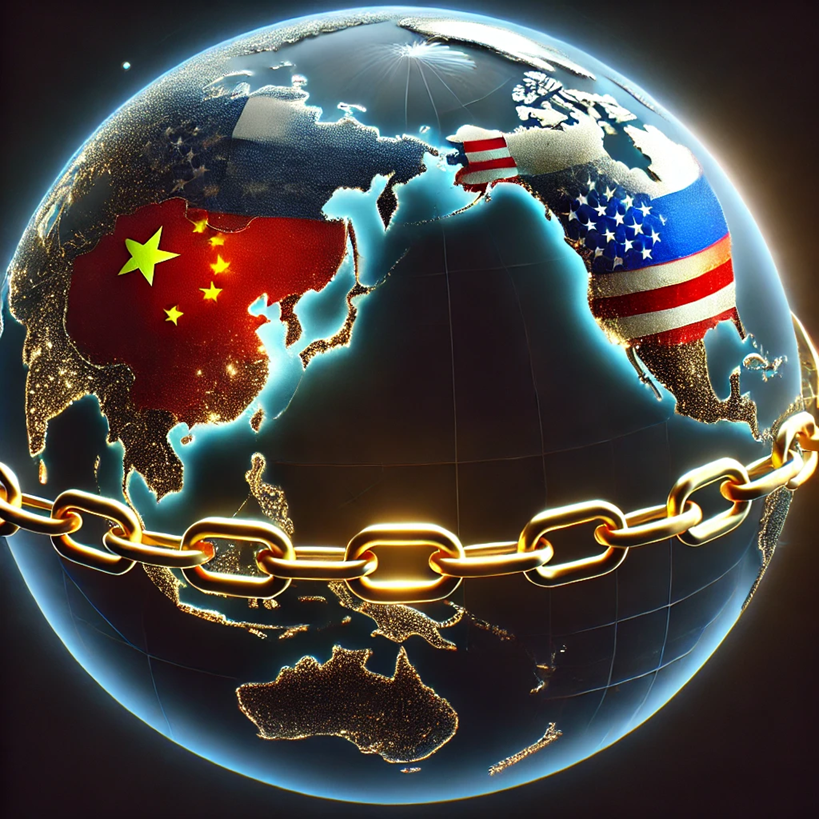


 Pax Consulting
Leave a reply to Syed Salman Mehdi Mosvi Cancel reply