
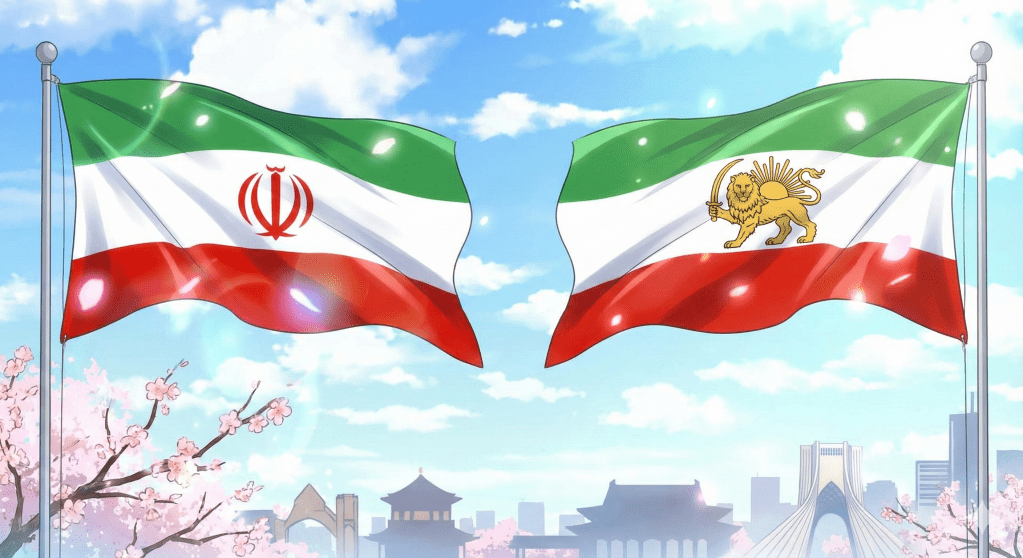
Just a quick analysis regarding the future of Iran. Enjoy.
INTRODUCTION
The situation in Iran has sparked hopes all over the world, especially among the Iranian diaspora. The winds of change are sweeping the earth. Gaza, Azerbaijan, Venezuela, Greenland, Thailand and Cambodia, Ukraine, war on tariffs and now Iran, to name a few.
Changes are always on the go but lately, it seems that they are happening continuously, one after the other and even overlapping one another.
Iran has been under the Ayatollah’s rule since 1979 and although it is not the first time that the regime deals with protests, it seems that the time for a change is becoming more plausible.
Even if the regime once again manages to suppress protesters and retain control, the reality is clear: incidents of unrest and demonstrations are becoming increasingly frequent. The authorities’ responses are notably more restrained and calculated, suggesting an awareness or apprehension that public support is waning after decades of rigid religious rule.
It is also clear that the regime is weaker than ever before if one looks at the retaliations carried out by Iran after the attacks inflicted by Israel or the U.S., last year. Its capacity to support its proxies is evidently very limited, as Hezbollah and Houthis know first-hand.
The takeout here is that the current regime is in dire straits and it will eventually disappear. Iran will then have to face new challenges and choose the way forward. What it seems inevitable is that some form of democracy will find the way to inhabit among the heirs of the Persian empire.
MONARCHY OR REPUBLIC.
Before 1979 Iran was ruled by the Sha. Although Iran was a Western-like society although repression had its own apparatus called SAVAK, the feared secret police.
Undoubtedly, it helped the arrival of the Islamic Republic, which conquered the power from exile. And repression again has favoured the change of regime. Lessons of the past have not been learnt. SAVAK was replaced by IRGC and Basij militia. Repression changed sides, but that was it.
Pendulum is reaching its peak and will revert its movement anytime soon.
Iranians will have to choose between monarchy or a republic. In the media, it seems that rioters are claiming for the return of the monarchy. Previous symbols, such as imperial flags (the lion and the sun) and pictures of the heir to the throne are shown publicly.
We have analysed the social network Bluesky to better understand if a monarchy is supported by the public or if a republic could find its way. This study has limitations:
- Iranian people with access to internet boils down to diaspora, especially after the internet blackout imposed in Iran.
- Iranian people have a limited knowledge of who Pahlevi is and what a democracy means, entails and obliges to.
- The opposition posed by the National Council of Resistance of Iran from Paris is also unknown to the Iranian people.
- There is no remarkable individual or organization inside Iran to lead any kind of transition.
Both systems, monarchy or republic, reverberate badly in Iran, but mainly the republic as it is associated with the current regime.
ANALYSIS.
The last 14 days have been violent in Iran. Deaths are increasing as well as protests increase in number of supporters and spread in extension all over the country.
The study is focused on those 14 latest days. Media accounts and bots detected have been excluded from it.
A sentiment analysis has been carried out among the remaining accounts.
The accounts show three main groupings:
- In favour of a monarchy.
- In favour of a republic.
- Those who just battle with the previous categories.
The most numerous are the accounts which just react to those who defend a monarchy or a republic, but who don’t reveal what’s their take.
In this group it is remarkable the vindicative language used and the violence that those posts reveal. It shows a polarisation on the topic.
Regarding the other two groups, here you have the main findings:
- The topic “republic” is much more discussed and mentioned than “monarchy”. Republic is discussed by 28% more accounts than monarchy. This is only in terms of number of users, not in terms of sentiment.
- Negative sentiment among those who mention republic is higher than those who mention monarchy. It means monarchy is widely more supported than the republic among Bluesky users.
| Sentiment | Republic | Monarchy | Difference |
| Positive | 1,191% | 1,400% | +0,209% for Monarchy |
| Negative | 3,508% | 2,900% | -0,608% for Monarchy |
In both cases, negative sentiment is larger than positive. But monarchists are 0,82% over republicans (less than 1%). In any case, differences are small.
CONCLUSIONS.
The heir to the Persian throne asserted in an interview in France24 that he is receiving messages from members of the Iran Revolutionary Guard Corps (IRGC) and the military who are ready to defect and support the change.
Even if the heir is exaggerating it seems plausible that the exhaustion of medium and some high-ranking officials may realize that they must position themselves for the times to come.
People are suffering economically and religious oppression is hard to impose on a young population who have had access to the West and who have relatives living in the West.
Monarchy, in this environment, may find its way because Reza Pahlevi is an individual recognizable by the international community, he is close to Israel, and he has always spoken in favour of instating a democracy.
He is most likely inspired by a monarchy like the one that runs Jordan. It has a practical basis, because imposing a democracy on a country (huge in extension and potentially rich if well managed) with no references of it, requires some touting and time to loosen the grip. Iran will need time to create political parties, to build leaders and educate the military and other institutions like law enforcement agencies free of former behavioural patterns.
So, taking into account that there is no personality of reference in the republican arena in Iran, that the heir to the throne is promoting himself and that he is being supported by the U.S. and Israel, it is very likely that he will direct the transition, once the Islamic Republic falls.
That period will give him the chance to be known by the Iranians and to promote himself among the people as a guarantor. This would enable him to re-establish a parliamentary monarchy in which the King holds considerable authority—serving primarily as the head of the armed forces with executive powers, wielding significant influence over foreign policy (such as the ability to veto international treaties), and possessing the legitimate right to dissolve one or both chambers of the prospective Parliament.
Intelligence services will play a pivotal role in those days, but the transitional period will have to rely on the intelligence provided by foreign powers, if it wants to survive. The reshuffle of the intelligence services and the armed forces will be directed from the West.
The fall of the Islamic Republic will have an impact geopolitically on China and Russia. Moreover, it will add up to Venezuela, which is another blow to that block, especially if Cuba comes next.


 Pax Consulting
Leave a comment